Wall panelling is one of the quickest ways to change the feel of a room without the mess of a full refurbishment. The ten ideas below are the ones we see most often in homes and commercial projects, and for each we note which panel type and which tone works best.
1. Acoustic panels behind the bed
The wall behind the bed is the first thing you see in a bedroom. Natural Oak acoustic panels run from floor to ceiling make the room feel warmer and noticeably quieter. Wall lights can be fixed straight onto the panels, with the cables hidden behind the slats.
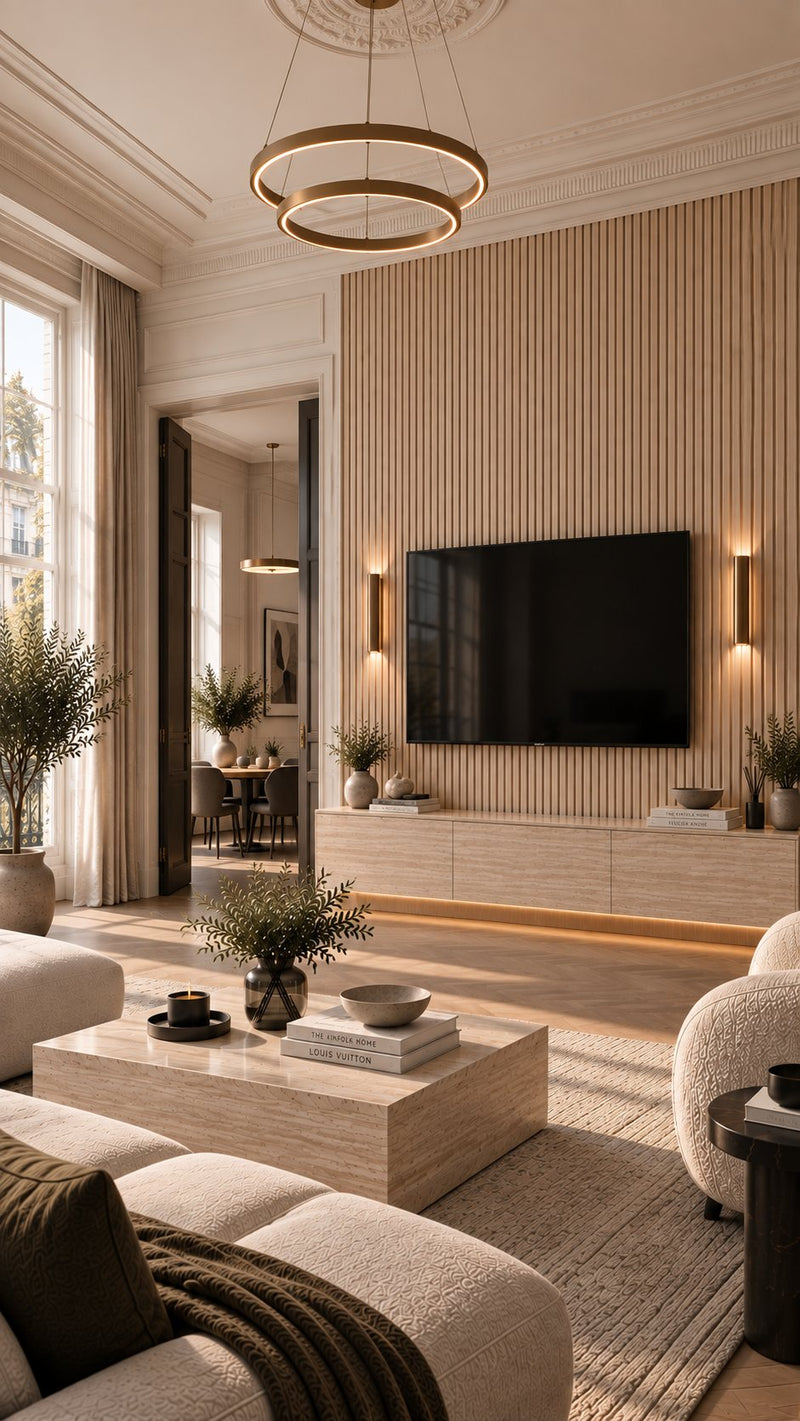
2. Dark slat panelling behind the TV
Anthracite or black slat panelling blends the black frame of the television into the wall so the screen looks smaller and tidier. A vertical LED strip either side of the media unit works beautifully in the evening. There are more ideas in our TV wall panelling guide.
3. Light slat panelling in a narrow hallway
Fit beige or white wood slat panels along the long wall of the hallway and keep the opposite wall painted. Vertical lines lift the ceiling height visually and the light tone opens up the space. Matching the trim to the door frames keeps it looking considered.
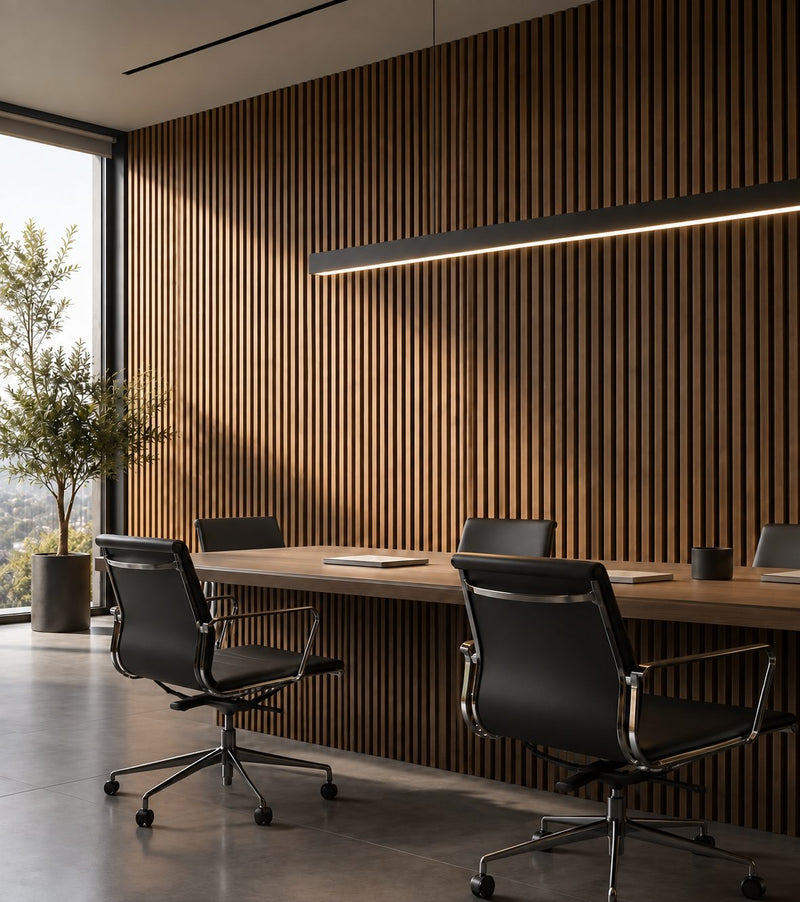
4. Controlling echo in a meeting room
Echo in glass-walled meeting rooms is one of the most common complaints in offices. Panelling two of the three solid walls with Sand Grey acoustic panels makes calls and conversations far more comfortable, and gives the camera a calm, orderly backdrop.
5. Stone finishes in cafés and restaurants
Travertine and Light Grey Stone finishes paired with timber tables and chairs create a cool, mineral atmosphere. In busy venues a wipeable surface saves staff real time.
6. A vertical feature in the stairwell
The stairwell is usually the tallest bare wall in a house. A single run of slat panelling up to the ceiling emphasises the height and lines up with the banister. A darker tone such as Dark Rock sits well on a large surface like this.
7. One wall in the home office
Seoul wood-finish acoustic panels on the wall behind the desk give you a neat background for video calls and a room that echoes less. Keep shelving on a side wall rather than on the panels so the picture stays calm.
8. A welcome wall in the entrance
Noce Marino slat panelling on the first wall you see from the front door, a slim console and a single light are all it takes. Finishing the panels in line with the shoe cabinet and coat hooks makes the whole area look ordered.
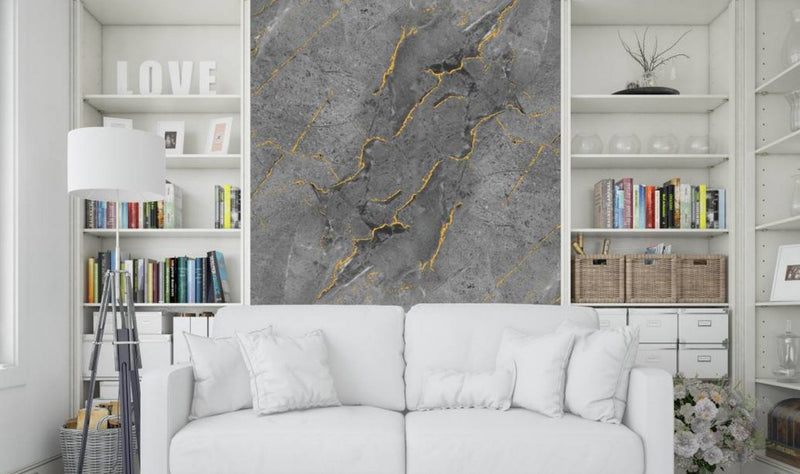
9. Marble effect PVC in the bathroom
Marble effect PVC wall panels in place of tiles mean no grout to clean. The 1220 x 2440 mm sheets cover the wall with very few joints, and white-based patterns such as Bianco Carrara make a small bathroom feel bigger. Our bathroom and kitchen guide covers the details.
10. Half-height panelling in a child's room
Aqua Green soft touch slat panelling is a popular choice for children's rooms, and pen marks wipe off the matt surface. Running it to bed height, around 1200 mm, instead of the full wall keeps the cost down and stops the room feeling closed in.
How to choose the right colour
Wall panels cover a large area, so choosing a colour is not like picking a cushion. Start with the light. North-facing rooms with cool light all day suit warm wood tones, while south-facing rooms full of sun can take greys and stone tones that calm the warmth down. Next, look at the floor. Dark walnut panels over light oak flooring create a strong contrast; panels close to the floor tone make the room feel calm and unified. Finally, think about the furniture. If you have a coloured sofa or a patterned rug, a plain neutral wall balances the visual weight of the room.
Will panelling make a small room feel smaller?
Done well, it does the opposite. Vertical slats draw the eye upwards and make the ceiling feel higher. In a small room, choose lighter tones, keep the panelling to one wall and paint the other walls close to the lightest tone in the panel. If you want a dark panel, the best place for it is the wall opposite the window, where daylight falls straight onto it and stops it feeling gloomy.
Ideas for renters
If you rent, think about a removable fixing rather than gluing straight to the wall. Screw the panels to thin timber battens and fix the battens to the wall with a few plugs, so the panels can come with you when you move. All that is left behind is a handful of holes that fill and paint easily. Half-height panelling and narrow blocks behind a TV are the most practical options for this approach.
Things to consider on commercial projects
In hotel corridors, restaurants and shops, choosing a panel is about more than looks. A wipeable surface, trims on corners that take knocks and easy maintenance should come first. On larger jobs, ask for all panels from the same production batch so the colour stays consistent. For square-metre pricing and technical support, talk to our projects team.
Combining panels with paint
The walls next to a panelled wall decide how finished the room looks. Beside wood-tone panels, off-white, sand or pale greige soften the transition better than brilliant white. Dark anthracite panels, on the other hand, make a crisp contrast with pure white or light grey. Painting the ceiling the same tone as the panels wraps a small room and gives it a boutique hotel feel. Matching door and window frames to the lightest or darkest tone in the panel adds a considered finish.
Where to start
If the budget is tight, start with the one wall that makes the biggest difference: the TV wall in the living room or the headboard wall in the bedroom. Order a sample to judge the colour in your own light, work out quantities with our panel calculator guide, and browse every range on our products page.