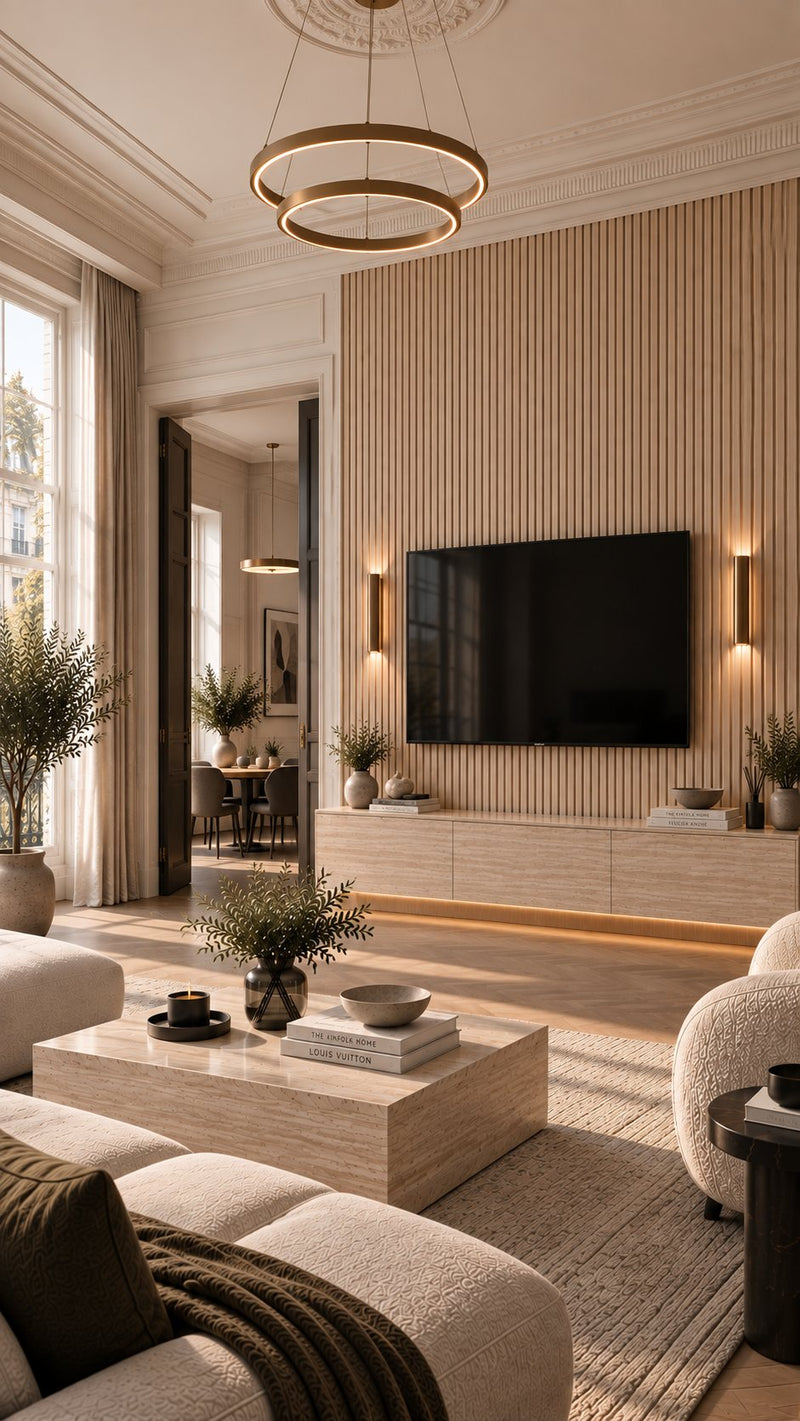
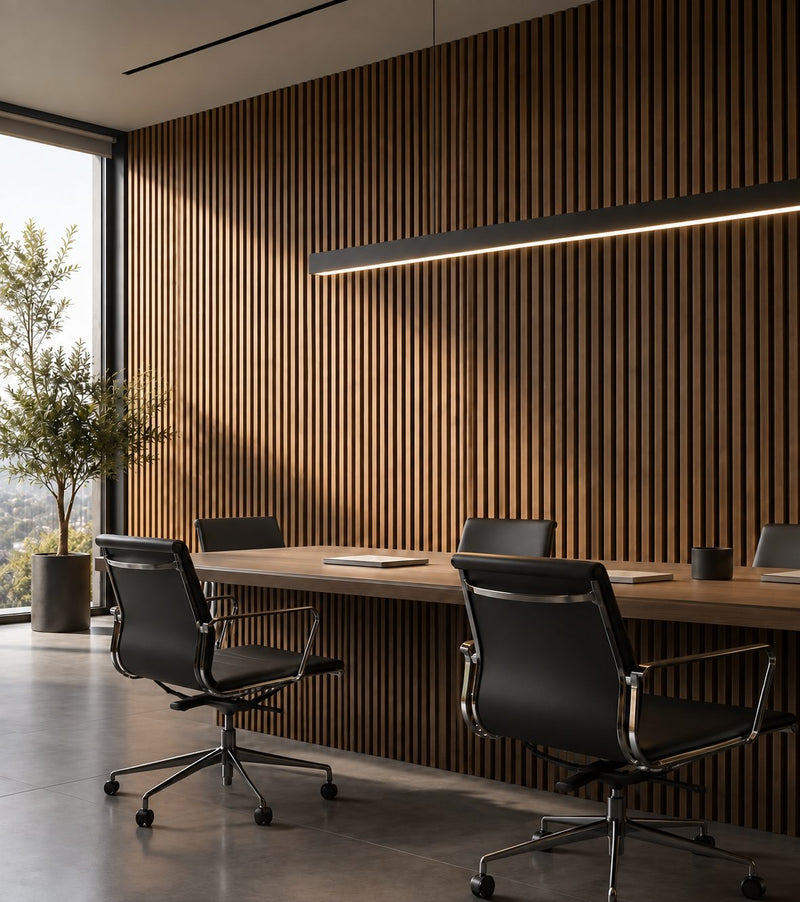
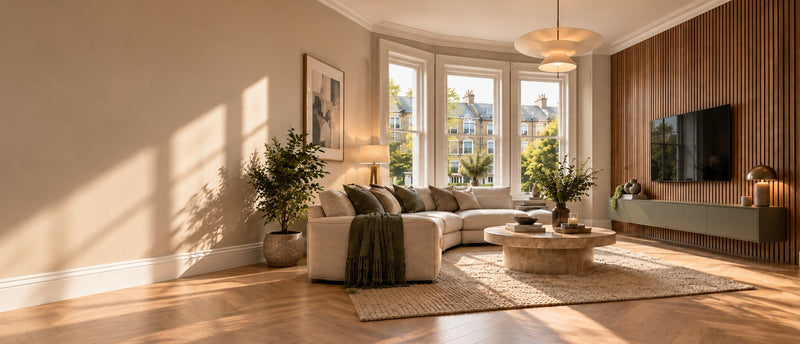
After the panels themselves, the adhesive is the most important material in a wall panelling job. Choose the wrong product and panels can creep, lift at the corners or blister on a PVC face. This guide explains which adhesive to use for acoustic slat panels, wood slat panelling and PVC wall panels, what to watch for on different wall surfaces and how to apply it properly.
Types of adhesive used for wall panels
Neutral-cure silicone
Neutral-cure silicone is flexible and moisture resistant, so it is used both for bonding and for sealing joints. Acetoxy silicones, the ones that smell of vinegar, can stain or corrode some surfaces, so choose neutral-cure silicone for panelling. It suits light panels and sealing the joints between PVC sheets.
MS polymer (hybrid) adhesive
MS polymer adhesives offer strong initial grab, stay flexible and contain no solvents, which makes them the most widely recommended choice for wall panels. They bond to almost any surface, cope with slightly uneven walls and will not damage PVC. They are a safe choice for acoustic panels, slat panelling and PVC sheets alike.
Polyurethane construction adhesive
Polyurethane adhesives expand slightly as they cure, filling gaps on porous or uneven surfaces and forming a permanent bond. They are strong on concrete, brick and timber battens. Because of that expansion they can show through thin PVC sheets, so use them with care on PVC.
Double-sided mounting tape
Handy for small, light decorative pieces, but not enough on its own for panels 2400 or 2800 mm long. It can be used alongside adhesive to hold a panel in place while the adhesive cures.
Which adhesive for which panel?
- Acoustic wall panels: MS polymer or panel adhesive. The felt is porous, so line the adhesive up behind the slats. Add screws on ceilings and tall walls.
- Wood slat panelling: MS polymer adhesive or neutral-cure silicone, in vertical beads behind each panel.
- PVC wall panels: solvent-free MS polymer adhesive, with neutral-cure sanitary silicone for joints and edges. Solvent-based adhesives can cause blistering, rippling and marks on PVC.
What to watch for on different walls
Painted plaster
The adhesive grips the paint and the paint grips the plaster, so the bond is only as strong as the weakest layer. On flaking, powdery or old, weak paint, sand it back or scrape down to sound plaster. Lightly sanding gloss paint improves the key.
Plasterboard
The paper face of plasterboard will not carry a heavy panel on its own. As well as adhesive, screw through into the metal or timber studs behind the board.
Tiles
PVC panels can go straight onto sound, clean, degreased tiles. Wipe the surface with an alcohol-based cleaner and use a little more adhesive over deep grout lines.
Concrete and brick
On dust-free, dry concrete and brick, polyurethane or MS polymer adhesive forms a strong bond. On rough brick walls, a timber batten frame gives a flatter finish.
How to apply the adhesive
- Prepare the surface. Remove dust, grease and loose paint. The surface must be completely dry.
- Prepare the cartridge. Cut the nozzle at 45 degrees, leaving an opening of around 6 to 8 mm.
- Choose the pattern. Vertical beads let the adhesive breathe and cure. Run them 200 to 300 mm apart and 30 to 40 mm in from the edges. On PVC sheets add extra dabs in the centre.
- Watch the open time. Fit the panel before the adhesive forms a skin. For most MS polymers this is around 10 to 20 minutes, but check the label.
- Press and support. Press the panel on along its full length. If needed, hold it with masking tape or a temporary prop until the adhesive grabs.
- Clean off excess. Wipe away any squeeze-out before it cures, using the cleaner the manufacturer recommends.
How many cartridges do I need?
Usage depends on the size and spacing of the beads. As a rough guide, a standard cartridge covers one or two 600 x 2400 mm acoustic panels, and around four to six slat panels. For PVC, allow one cartridge per sheet plus silicone for the joints. Running out halfway through is frustrating, so add one cartridge to whatever you calculate.
Curing time and afterwards
Most adhesives firm up enough to hold the panel within a few hours, but full cure usually takes 24 hours or longer. Do not hang shelves, a TV bracket or anything heavy in that time. Curing is slower in cold, damp conditions. After fitting PVC in a bathroom, leave the shower unused for at least 24 hours so the silicone joints can cure.
Fitting in cold or damp conditions
Most adhesives perform best between 5 and 35°C. If you are fitting panels in winter in an unheated new build or a building under refurbishment, warm the room and the panels first. On a cold wall adhesive grabs slowly and panels can slide. Where there is fresh plaster or screed, let the walls dry out fully; a damp wall weakens the bond and can lead to condensation behind PVC sheets.
Common mistakes
- Using solvent-based adhesive on PVC panels.
- Spreading adhesive right to the edges so it squeezes out.
- Applying to a dusty or damp surface.
- Relying on adhesive alone on ceilings and plasterboard.
- Pressing the panel onto adhesive that has already skinned over.
Frequently asked questions
Can acoustic panels be fixed with silicone alone?
On flat, sound walls neutral-cure silicone can be enough, but MS polymer adhesive gives a stronger initial grab and is the safer choice.
Will the adhesive damage the wall?
If the panels are removed, the adhesive may pull away some paint and plaster. For a removable installation, screw the panels to battens instead. Our installation guide covers the steps.
Where can I buy fixing materials?
Silicone, sealant guns and trims are in our installation accessories. If you are not sure what suits your project, ask us.