Do acoustic panels soundproof a room? The short answer is no, but that does not mean they do not work. Soundproofing and acoustic treatment solve two different problems, and knowing which one you have saves you from buying the wrong product.
Soundproofing vs acoustic treatment
Soundproofing stops sound travelling from one space to another: the neighbour's television, voices from the next room or traffic outside. It relies on mass and separation, such as heavier walls, double layers of plasterboard, mineral wool infill and decoupled structures.
Acoustic treatment changes how sound behaves inside a room. It reduces sound bouncing off hard surfaces, shortens reverberation and makes speech clearer. Acoustic wall panels are designed for this second job.
How do acoustic slat panels work?
Sound waves pass through the gaps between the slats and reach the felt behind them. The porous felt turns part of that sound energy into a tiny amount of heat, so less sound reflects back into the room. The effect is strongest in the mid and high frequencies where most speech sits. Controlling deep bass needs much thicker, purpose-built bass traps.
Which rooms benefit most?
- Living rooms with hard surfaces: wooden floors, large windows and few soft furnishings create obvious echo, so the difference is immediate.
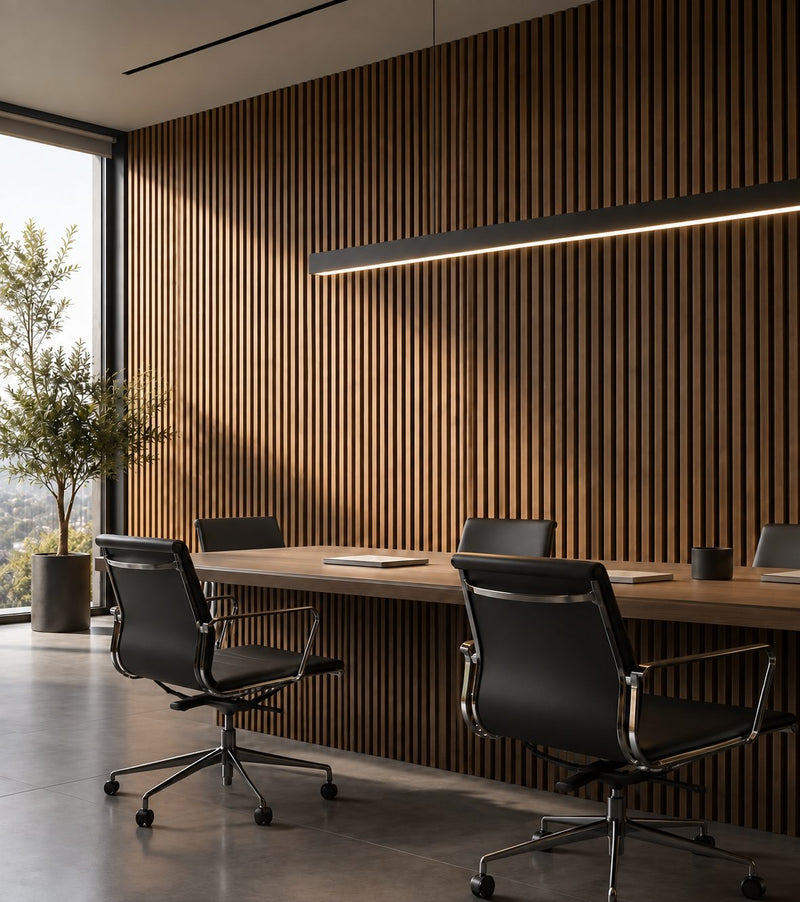
- Meeting rooms and home offices: people on the other end of a call hear you more clearly. See our office acoustics guide for more.
- Cafés and restaurants: conversations at different tables stop blending into one loud hum.
- Music and recording spaces: reflections inside the room become more controlled.
In rooms that already have carpet, curtains and plenty of upholstered furniture the change is smaller, because those surfaces absorb sound already.
How many panels do you need for a real difference?
One panel changes how a wall looks, but an acoustic improvement needs a meaningful surface area. A practical starting point is to cover around 15 to 25 per cent of the wall area. Treating one of two parallel walls breaks up the flutter echo that bounces between them. Our quantity guide helps you work out numbers.
What to do about noise from neighbours
If the problem is sound coming in, start by sealing gaps: door seals, window seals, and gaps around sockets and pipes. If the wall itself is thin, the answer is an independent lining wall with mineral wool and a double layer of plasterboard. Acoustic panels can then go on top as the finishing layer, taming the echo in the room and giving the new wall a decorative face.
What is reverberation time and why does it matter?
One of the most common measures in acoustics is reverberation time: roughly, how long a sound hangs in the room after it stops. In an empty room with hard surfaces it is long, voices overlap and even conversation at the table becomes tiring. Meeting rooms, classrooms and restaurants aim for a short reverberation time because speech clarity depends on it. Acoustic panels shorten it by adding absorbent surface to the room.
You can hear this at home with a simple test. Stand in the middle of the room and clap once, sharply. If you hear a metallic ring or a fast repeating echo after the clap, the room will benefit from treatment. Repeat the test after fitting panels and the difference is obvious even without a meter.
Where should the panels go?
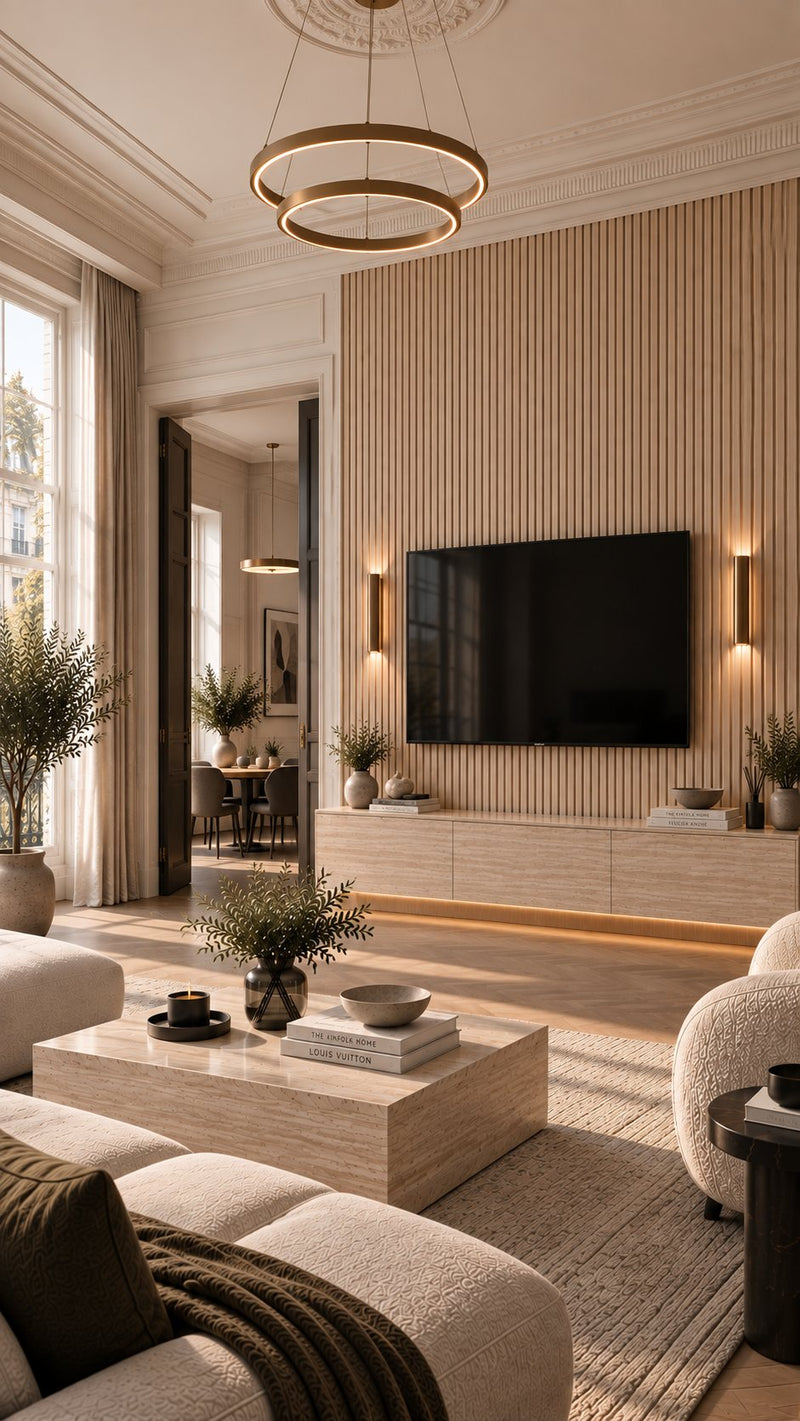
The same number of panels in the right place does far more than in the wrong one. Start with bare parallel walls, because sound bounces back and forth between them; covering one of the pair breaks up that flutter echo. Next, treat the walls nearest to where people sit or work. The wall opposite a desk or behind a sofa is where sound reflects first, so it gives the quickest result. In a living room, the TV wall is a natural starting point both visually and acoustically.
Can acoustic panels be combined with other absorbent materials?
Yes, and the best results usually come from a mix. A thick rug tames reflections from the floor, heavy curtains soften glass, and full bookshelves scatter sound. Acoustic wall panels are the permanent, decorative part of that mix. In minimal modern homes without rugs or curtains, the panels carry even more of the load.
Acoustic planning on commercial projects
In restaurants, offices and schools, acoustics affect the work itself, not just comfort. In a noisy restaurant guests leave sooner, in an open office concentration drops, and in a classroom speech becomes harder to follow. On projects like these, the right way is to plan panel quantity and placement from the floor plan. Our projects team can help with quantities and colour choice.
Balancing looks and acoustics
Most people choose acoustic panels by colour alone, but slat spacing and the amount of wall covered matter too. The more felt that shows between the slats, the more surface the sound has to reach. Standard slat panels strike a balance between a decorative face and acoustic effect. Placement matters as well: one large block of panels creates a strong focal point, while spreading panels across several walls breaks up echo more evenly. Homes usually suit a single feature wall, while offices and restaurants benefit from a spread layout.
Frequently asked questions
Will acoustic panels block noise from next door?
No. They reduce echo inside the room and make little difference to how much sound passes through the wall.
Do egg boxes or foam panels do the same job?
Egg boxes have almost no acoustic effect. Foam absorbs some sound but is neither decorative nor durable. Felt-backed slat panels absorb sound and work as a permanent interior finish.
What colours are available?
Wood, stone and solid colours. Black and Storm Grey are popular in modern offices, while the wood tones are the favourites in homes.